
We must prefer God over anything else.

I. A godly man prefers God before any thing else in heaven. 

1. He prefers God before any thing else that actually is in heaven. Every godly man hath his heart in heaven; his affections are mainly set on what is to be had there. Heaven is his chosen country and inheritance. He hath respect to heaven, as a traveller, who is in a distant land, hath to his own country. The traveller can content himself to be in a strange land for a while, but his own native land is preferred by him to all others: Heb. xi. 13., &c. “These all died in faith, not having received the promises, but were persuaded of them, and embraced them, and confessed that they were strangers and pilgrims on the earth. For they that say such things, declare plainly that they seek a country. And truly if they had been mindful of that country from whence they came out, they might have had opportunity to have returned: but now they desire a better country, that is, a heavenly.”—The respect which a godly person hath to heaven may be compared to the respect which a child, when he is abroad, hath to his father’s house. He can be contented abroad for a little while; but the place to which he desires to return, and in which to dwell, is his own home. Heaven is the true saint’s Father’s house: John xiv. 2. “In my Father’s house are many mansions.” John xx. 17. “I ascend to my Father and your Father.” 

Now, the main reason why the godly man hath his heart thus to heaven, is because God is there; that is the palace of the Most High. It is the place where God is gloriously present, where his love is gloriously manifested, where the godly may be with him, see him as he is, and love, serve, praise, and enjoy him perfectly. If God and Christ were not in heaven, he would not be so earnest in seeking it, nor would he take so much pains in a laborious travel through this wilderness, nor would the consideration that he is going to heaven when he dies, be such a comfort to him under toils and afflictions. The martyrs would not undergo cruel sufferings, from their persecutors, with a cheerful prospect of going to heaven, did they not expect to be with Christ, and to enjoy God there. They would not with that cheerfulness forsake all their earthly possessions, 105and all their earthly friends, as many thousands of them have done, and wander about in poverty and banishment, being destitute, afflicted, tormented, in hopes of exchanging their earthly for a heavenly inheritance, were it not that they hope to be with their glorious Redeemer and heavenly Father.—The believer’s heart is in heaven, because his treasure is there. 

2. A godly man prefers God before any thing else that might be in heaven. Not only is there nothing actually in heaven, which is in his esteem equal with God; but neither is there any of which he can conceive as possible to be there, which by him is esteemed and desired equally with God. Some suppose quite different enjoyments to be in heaven, from those which the Scriptures teach us. The Mahometans, for instance, suppose that in heaven are to be enjoyed all manner of sensual delights and pleasures. Many things which Mahomet has feigned are to the lusts and carnal appetites of men the most agreeable that he could devise, and with them he flattered his followers.—But the true saint could not contrive one more agreeable to his inclination and desires, than such as is revealed in the word of God; a heaven of enjoying the glorious God, and the Lord Jesus Christ. There he shall have all sin taken away, and shall be perfectly conformed to God, and shall spend an eternity in exalted exercises of love to him, and in the enjoyment of his love. If God were not to be enjoyed in heaven, but only vast wealth, immense treasures of silver, and gold, great honour of such kind as men obtain in this world, and a fulness of the greatest sensual delights and pleasures; all these things would not make up for the want of God and Christ, and the enjoyment of them there. If it were empty of God, it would indeed be an empty melancholy place.—The godly have been made sensible, as to all creature-enjoyments, that they cannot satisfy the soul; and therefore nothing will content them but God. Offer a saint what you will, if you deny him God, he will esteem himself miserable. God is the centre of his desires; and as long as you keep his soul from its proper centre, it will not be at rest

Jonathan Edwards

Morning & Evening

Morning and Evening

Morning, November 15

The Lord’s portion is his people. – Deut 32:9

How are they His portion?

First, by His sovereign choice. He chose them and set His love upon them. He selected them completely apart from any goodness they had at the time or any He foresaw in them. He had mercy on whom He would have mercy and appointed a chosen people for eternal life. Therefore, they are His by His free and unforced election.

Not only are they His by choice, but also by purchase. He bought and paid for them fully, down to the last detail. There can be no dispute over His ownership of them. The Lord’s portion has been redeemed, not with perishable things like silver or gold but with the precious blood of Jesus Christ! See the blood-mark on all the elect—unseen by human eyes but known to Christ, for “the Lord knows those who are His.” He forgets none whom He has redeemed. He counts every sheep for whom He laid down His life and remembers all those for whom He gave Himself.

They are also His by conquest. What a battle He had with us before we were won! How long He besieged our hearts! How many times He sent us terms of surrender! Yet we barred our gates and fortified our walls against Him. Do we not remember that glorious moment when He conquered our hearts? When He placed His cross against the wall and scaled our defenses, planting the blood-red flag of His mercy on our strongholds? Yes, we are the captives of His overwhelming love!

Chosen, purchased, and conquered—the rights of our divine Master are absolute. We rejoice that we will never belong to ourselves again, and every day we desire to do His will and show forth His glory!

https://www.youdevotion.com/morneven/november/15

Jesus Christ is the WORD

John 1

The Word Became Flesh

[1] In the beginning was the Word, and the Word was with God, and the Word was God. [2] He was in the beginning with God. [3] All things were made through him, and without him was not any thing made that was made. [4] In him was life, and the life was the light of men. [5] The light shines in the darkness, and the darkness has not overcome it.

[6] There was a man sent from God, whose name was John. [7] He came as a witness, to bear witness about the light, that all might believe through him. [8] He was not the light, but came to bear witness about the light.

[9] The true light, which gives light to everyone, was coming into the world. [10] He was in the world, and the world was made through him, yet the world did not know him. [11] He came to his own, and his own people did not receive him. [12] But to all who did receive him, who believed in his name, he gave the right to become children of God, [13] who were born, not of blood nor of the will of the flesh nor of the will of man, but of God.

[14] And the Word became flesh and dwelt among us, and we have seen his glory, glory as of the only Son from the Father, full of grace and truth. [15] (John bore witness about him, and cried out, “This was he of whom I said, ‘He who comes after me ranks before me, because he was before me.’”) [16] For from his fullness we have all received, grace upon grace. [17] For the law was given through Moses; grace and truth came through Jesus Christ. [18] No one has ever seen God; God the only Son, who is at the Father’s side, he has made him known.

The Testimony of John the Baptist

[19] And this is the testimony of John, when the Jews sent priests and Levites from Jerusalem to ask him, “Who are you?” [20] He confessed, and did not deny, but confessed, “I am not the Christ.” [21] And they asked him, “What then? Are you Elijah?” He said, “I am not.” “Are you the Prophet?” And he answered, “No.” [22] So they said to him, “Who are you? We need to give an answer to those who sent us. What do you say about yourself?” [23] He said, “I am the voice of one crying out in the wilderness, ‘Make straight the way of the Lord,’ as the prophet Isaiah said.”

[24] (Now they had been sent from the Pharisees.) [25] They asked him, “Then why are you baptizing, if you are neither the Christ, nor Elijah, nor the Prophet?” [26] John answered them, “I baptize with water, but among you stands one you do not know, [27] even he who comes after me, the strap of whose sandal I am not worthy to untie.” [28] These things took place in Bethany across the Jordan, where John was baptizing.

Behold, the Lamb of God

[29] The next day he saw Jesus coming toward him, and said, “Behold, the Lamb of God, who takes away the sin of the world! [30] This is he of whom I said, ‘After me comes a man who ranks before me, because he was before me.’ [31] I myself did not know him, but for this purpose I came baptizing with water, that he might be revealed to Israel.” [32] And John bore witness: “I saw the Spirit descend from heaven like a dove, and it remained on him. [33] I myself did not know him, but he who sent me to baptize with water said to me, ‘He on whom you see the Spirit descend and remain, this is he who baptizes with the Holy Spirit.’ [34] And I have seen and have borne witness that this is the Son of God.”

Jesus Calls the First Disciples

[35] The next day again John was standing with two of his disciples, [36] and he looked at Jesus as he walked by and said, “Behold, the Lamb of God!” [37] The two disciples heard him say this, and they followed Jesus. [38] Jesus turned and saw them following and said to them, “What are you seeking?” And they said to him, “Rabbi” (which means Teacher), “where are you staying?” [39] He said to them, “Come and you will see.” So they came and saw where he was staying, and they stayed with him that day, for it was about the tenth hour. [40] One of the two who heard John speak and followed Jesus was Andrew, Simon Peter’s brother. [41] He first found his own brother Simon and said to him, “We have found the Messiah” (which means Christ). [42] He brought him to Jesus. Jesus looked at him and said, “You are Simon the son of John. You shall be called Cephas” (which means Peter).

Jesus Calls Philip and Nathanael

[43] The next day Jesus decided to go to Galilee. He found Philip and said to him, “Follow me.” [44] Now Philip was from Bethsaida, the city of Andrew and Peter. [45] Philip found Nathanael and said to him, “We have found him of whom Moses in the Law and also the prophets wrote, Jesus of Nazareth, the son of Joseph.” [46] Nathanael said to him, “Can anything good come out of Nazareth?” Philip said to him, “Come and see.” [47] Jesus saw Nathanael coming toward him and said of him, “Behold, an Israelite indeed, in whom there is no deceit!” [48] Nathanael said to him, “How do you know me?” Jesus answered him, “Before Philip called you, when you were under the fig tree, I saw you.” [49] Nathanael answered him, “Rabbi, you are the Son of God! You are the King of Israel!” [50] Jesus answered him, “Because I said to you, ‘I saw you under the fig tree,’ do you believe? You will see greater things than these.” [51] And he said to him, “Truly, truly, I say to you, you will see heaven opened, and the angels of God ascending and descending on the Son of Man.”

Pslam 23

A Psalm of David.
Yahweh is my shepherd,
I shall not want.
He makes me lie down in green pastures;
He leads me beside quiet waters.
He restores my soul;
He guides me in the paths of righteousness
For His name’s sake.
Even though I walk through the valley of the shadow of death,
I fear no evil, for You are with me;
Your rod and Your staff, they comfort me.
You prepare a table before me in the presence of my enemies;
You have anointed my head with oil;
My cup overflows.
Surely goodness and lovingkindness will pursue me all the days of my life,
And I will dwell in the house of Yahweh forever.
— Psalm 23:1-6

Loving Yourself

“Love your neighbor as yourself. Galatians 5:14

Some of the early church fathers concluded from this passage that love begins with loving yourself. They said this because loving yourself was given as the measure for how much you should love your neighbor. I used to consider this from all sides to try to understand it. I understand this commandment to mean that only love toward your neighbor is being commanded, not love of yourself. First, self-love is already present in all people. Second, if God had wanted to command you to love yourself, he would have said, “You should love yourself and your neighbor as yourself.” But he said instead, “Love your neighbor as yourself.” In other words, “as yourself ” means the way you already love yourself, without a commandment to do so. When describing love in 1 Corinthians 13:5, Paul teaches that love is not self-seeking. It completely rejects self-love. In Mark 8:34, Christ commands us to deny ourselves. Philippians 2:3–4 clearly says, “In humility consider others better than yourselves. Each of you should look not only to your own interests, but also to the interests of others.” This commandment presupposes that people already love themselves, just as when Christ says in Matthew 7:12, “Do to others what you would have them do to you.” Clearly he isn’t commanding you to love yourself here either. So it seems to me the part of this commandment that says “as yourself ” is referring to the wrong kind of love—the kind where you forget your neighbor and seek only your own interests. But this can become the right kind of love if you forget yourself and think only about serving your neighbor.

Martin Luther

The New Self

Colossians 3:1-17

Put On the New Self

[1] If then you have been raised with Christ, seek the things that are above, where Christ is, seated at the right hand of God. [2] Set your minds on things that are above, not on things that are on earth. [3] For you have died, and your life is hidden with Christ in God. [4] When Christ who is your life appears, then you also will appear with him in glory.

[5] Put to death therefore what is earthly in you: sexual immorality, impurity, passion, evil desire, and covetousness, which is idolatry. [6] On account of these the wrath of God is coming. [7] In these you too once walked, when you were living in them. [8] But now you must put them all away: anger, wrath, malice, slander, and obscene talk from your mouth. [9] Do not lie to one another, seeing that you have put off the old self with its practices [10] and have put on the new self, which is being renewed in knowledge after the image of its creator. [11] Here there is not Greek and Jew, circumcised and uncircumcised, barbarian, Scythian, slave, free; but Christ is all, and in all.

[12] Put on then, as God’s chosen ones, holy and beloved, compassionate hearts, kindness, humility, meekness, and patience, [13] bearing with one another and, if one has a complaint against another, forgiving each other; as the Lord has forgiven you, so you also must forgive. [14] And above all these put on love, which binds everything together in perfect harmony. [15] And let the peace of Christ rule in your hearts, to which indeed you were called in one body. And be thankful. [16] Let the word of Christ dwell in you richly, teaching and admonishing one another in all wisdom, singing psalms and hymns and spiritual songs, with thankfulness in your hearts to God. [17] And whatever you do, in word or deed, do everything in the name of the Lord Jesus, giving thanks to God the Father through him.

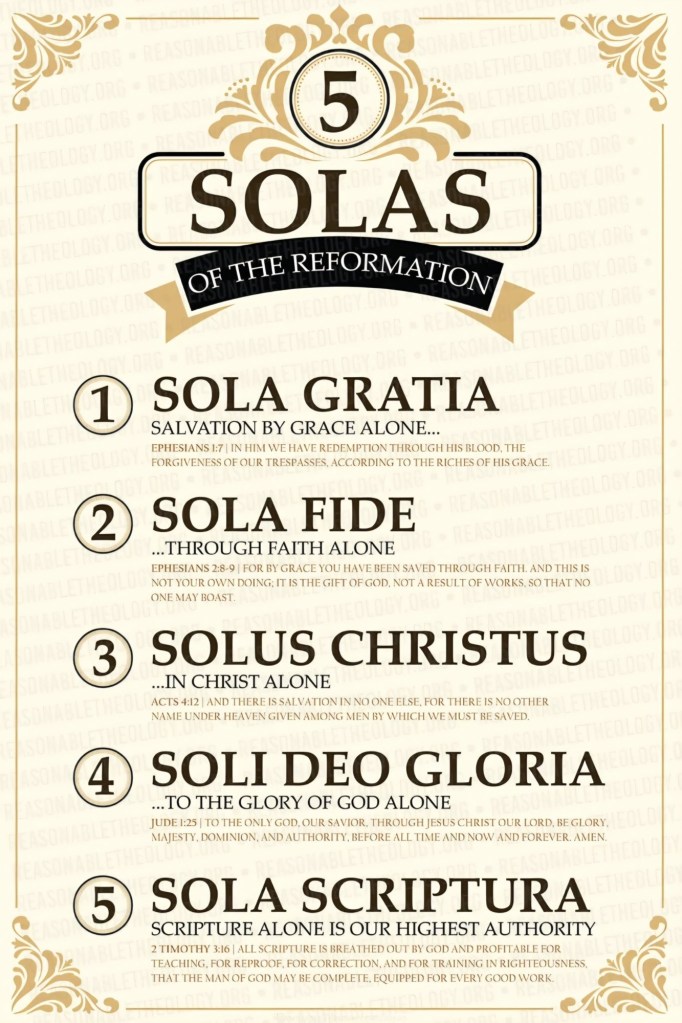
Are we saved by Faith in Christ Jesus?

Yes, absolutely. Salvation comes through faith in Jesus Christ alone, not by works or personal merit.

Paul makes this unmistakably clear: we are justified by faith, not by keeping the law or earning God’s favor. This is the heartbeat of the gospel. Jesus himself said that believing in him is the path to eternal life.

A few important things faith in Christ actually means:

  • Belief in who he is: the Son of God who died for sin and rose again
  • Trust, not just knowledge: saving faith is active reliance on Christ, not mere intellectual agreement
  • Transformation follows: genuine faith produces a changed life, though works do not earn salvation

James reminds us that a faith with no evidence of change is not saving faith. But the change is the fruit, not the root. The root is always Christ and what he accomplished.

This is the most important truth in all of scripture: you cannot save yourself. Christ did what you could not do. Faith is simply receiving that gift.


Scripture

“For by grace you have been saved through faith. And this is not your own doing; it is the gift of God, not a result of works, so that no one may boast.”
Ephesians 2:8-9

“For God so loved the world, that he gave his only Son, that whoever believes in him should not perish but have eternal life.”
John 3:16