


Tag: worship
The Holy Spirit

This age is peculiarly the dispensation of the Holy Spirit, in which Jesus cheers us not by His personal presence, as He will do soon enough, but by the indwelling and constant abiding of the Holy Spirit, who is forever the Comforter of the church. It is the Spirit’s role to console the hearts of God’s people. He convinces of sin; He illumines and instructs; but the main part of His work still lies in gladdening the hearts of the renewed, confirming the weak, and lifting up all those who are bowed down. He does this by revealing Jesus to them. The Holy Spirit consoles, but Christ is the consolation.
If we may use the figure, the Holy Spirit is the Physician, but Jesus is the medicine. He heals the wound, but it is by applying the holy ointment of Christ’s name and grace. He does not take of His own things, but of the things of Christ. So if we give to the Holy Spirit the Greek name of Paraclete, as we sometimes do, then our heart confers on our blessed Lord Jesus the title of Paraclesis. If one is the Comforter, the other is the Comfort.
Now, with such rich provision for his need, why should the Christian be sad and despondent? The Holy Spirit has graciously committed to be your Comforter: Do you imagine, weak and trembling believer, that He will neglect this sacred trust? Do you suppose that He has undertaken what He cannot or will not perform? If it is His special work to strengthen you and to comfort you, do you suppose He has forgotten His business or that He will fail in fulfilling His loving task of sustaining you? Don’t think so poorly of the tender and blessed Spirit whose name is the Comforter.
He delights to give the oil of joy for mourning and the garment of praise for the spirit of heaviness. Trust in Him, and He will surely comfort you until the house of mourning is closed forever, and the marriage feast has begun.
Charles H. Spurgeon
The Beginning
Genesis 1
Genesis begins with these words: “In the beginning, God . . . .” This simple introduction to the book—and to the entire Bible—reminds us of an incredibly significant fact: the God who created this world and us has existed forever in glory, splendor, and power.
Think about this for a moment. There has never been a time—ever—that God has not existed. There was a time when you did not yet exist. There was a time when this entire world—the whole universe—did not exist. God, though, is eternal; he has always existed in his perfect being, glory, and holiness. This concept is far beyond our capacity as humans to completely grasp.
In the beginning, before anything existed, God was there; he chose to create the universe, the reality that we know and see all around us. So what does this mean for us as we study the Bible?
God has existed eternally as the same God.
First, it means that God has always been the same; he has not changed throughout time but has eternally existed as exactly the same God. The Bible reveals him to us as one God in three persons—the Father, the Son, and the Holy Spirit. God has eternally existed in this way, and always will.
This idea that God never changes is very important when studying the Old Testament accounts of God’s dealings with his people. The same God who spoke to Moses and Abraham is the God who invites us to know him and worship him through faith in Christ!
God has life within himself.
Next, the truth of God’s eternality means that he has life within himself. No one gives life to God; he exists completely on his own. This is a difficult concept to grasp because this is true of no other being in the universe, including Satan and all the angels. God is the only being who does not depend on any other factor for his existence. He has existed from eternity as who he is, having life within himself, and in perfect harmony as one God in three persons.
God does not need us.
This truth flows out of the last one. If God has existed eternally with life within himself and with perfect harmony within the Trinity, then it follows that God does not need us. He did not choose to create the heavens, the earth, and human beings because of some deficiency in his existence or because he was lonely! God is completely self-sufficient—“happy” and full of life within himself. It must be that God chose to create simply for his own glory—out of the overflow of his own goodness and pleasure, which he possessed before the universe began.
We need God.
This all means, of course, that while God does not need us, we desperately need him. We are finite beings; because of sin (Gen. 3), we get sick, grow old, and die. Our only hope on this earth is to find a way to know this glorious Creator and to be saved through a relationship with him. Human beings desperately need this salvation. The amazing promise that we learn as we study the Bible is that God truly offers this salvation to the humans he has created.

The Lords Prayer
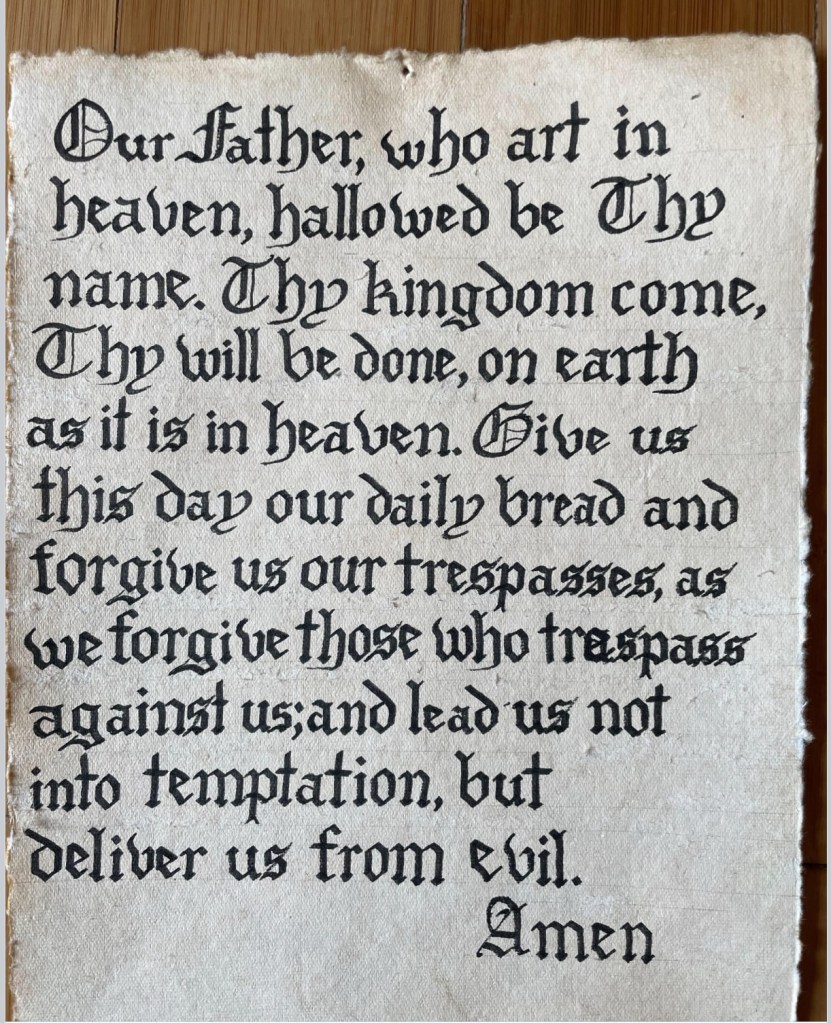
The Lord’s Prayer (KJV)
Our Father which art in heaven,
Hallowed be thy name.
Thy kingdom come,
Thy will be done in earth, as it is in heaven.
Give us this day our daily bread.
And forgive us our debts, as we forgive our debtors.
And lead us not into temptation, but deliver us from evil.
For thine is the kingdom, and the power, and the glory, for ever. Amen.
6 Steps taught in the Lord’s Prayer.
1. Address God’s rightful place as the Father
2. Worship and praise God for who He is and all that He has done
3. Acknowledge that it is God’s will and plans are in control and not our own
4. Ask God for the things that we need
5. Confess our sins and repent
6. Request protection and help in overcoming sin and Satan’s attacks on us
Meaning of the Lord’s Prayer
The Father-Son relationship within the Trinity reveals our potential relationship with God. Christ, the Son of God, grants us the privilege of calling God Our Father by the grace of adoption (Galatians 4:4-7). As a “son of God,” the Christian is called to love, trust, and serve God as Christ does the Father. We must note that God is not our Father simply because He created us. He is the only Father to those in a saving and personal relationship with Him, a communion that only comes by the grace of adoption.

Do you believe in deliverance?
Someone asked me If I believe in deliverance, and my answer was, of course, when you are saved you are delivered from the penalty of sin and bondage of sin.
But after you are saved you don’t need salvation again, and again, and you don’t need deliverance, again and again – because Salvation is Deliverance, and Deliverance is Salvation!
John 8:36-NASB
So if the Son sets you free, you really will be free
2 Corinthians 3:17-NASB
Now the Lord is the Spirit, and where the Spirit of the Lord is, there is freedom.
Pastor Danno M. Romann
Holy Faith Bible Church


The Glory Of Christ
The glory of the law repels, but the greater glory of Jesus attracts. Though Jesus is holy and just, yet blended with His purity there is so much truth and grace that sinners run to Him amazed at His goodness, fascinated by His love; they greet Him, become His disciples, and take Him to be their Lord and Master.

C.H. Spurgeon
I Believe, Help My Unbelief
Mark 9:14-27 CSB
[14] When they came to the disciples, they saw a large crowd around them and scribes disputing with them. [15] When the whole crowd saw him, they were amazed and ran to greet him. [16] He asked them, “What are you arguing with them about?” [17] Someone from the crowd answered him, “Teacher, I brought my son to you. He has a spirit that makes him unable to speak. [18] Whenever it seizes him, it throws him down, and he foams at the mouth, grinds his teeth, and becomes rigid. I asked your disciples to drive it out, but they couldn’t.” [19] He replied to them, “You unbelieving generation, how long will I be with you? How long must I put up with you? Bring him to me.” [20] So they brought the boy to him. When the spirit saw him, it immediately threw the boy into convulsions. He fell to the ground and rolled around, foaming at the mouth. [21] “How long has this been happening to him?” Jesus asked his father. “From childhood,” he said. [22] “And many times it has thrown him into fire or water to destroy him. But if you can do anything, have compassion on us and help us.” [23] Jesus said to him, “‘If you can’? Everything is possible for the one who believes.” [24] Immediately the father of the boy cried out, “I do believe; help my unbelief!” [25] When Jesus saw that a crowd was quickly gathering, he rebuked the unclean spirit, saying to it, “You mute and deaf spirit, I command you: Come out of him and never enter him again.” [26] Then it came out, shrieking and throwing him into terrible convulsions. The boy became like a corpse, so that many said, “He’s dead.” [27] But Jesus, taking him by the hand, raised him, and he stood up.

What is Faith?

False teachers teach that Faith is Faithfulness, in other words they teach Faith is Obedience! That is such a False Doctrine! Faith is Obedience, Faith is Trusting and Believing in Christ Jesus!
In the New Testament, pistis tends to mean trust, trustworthiness, faithfulness, or belief. For example, when Jesus tells the disciples, “Have pistis in God” (Mark 11:22), he is urging them to trust in God when they pray. When Paul speaks of God’s pistis (e.g., Rom 3:3), he is referring to God’s trustworthiness in fulfilling God’s promises. When Paul reminds the Corinthians “that Christ died for our sins,” he says, “so we preach, and so you episteusate,” meaning “so you believed” (1Cor 15:11).
Sometimes it is unclear whether a writer is referring to trust, belief, or both. When Jesus says, “Pisteuete in God, pisteuete also in me” (John 14:1), we cannot be sure whether he is saying, “Believe in me as you believe in God,” “Trust in God and trust in me,” or both.!!!
Have Faith in God!
Faith is Trusting, and Believing in God!

faith #FaithInGod
Michael Heiser: A Modern Day Gnostic

The Late Dr. Michael Heiser Wrote this in his book the Unseen Realm
“The God of the Old Testament was part of an assembly – pantheon – of other gods.”
(Heiser also said) “It is not difficult to demonstrate that the Hebrew Bible assumes and affirms the existence of other gods.
But, St Irenaeus states in refuting Gnosticism,
When, however, the Scripture terms them [gods] which are no gods, it does not, as I have already remarked, declare them as gods in every sense, but with a certain addition and signification, by which they are shown to be no gods at all. As with David: The gods of the heathen are idols of demons; and, You shall not follow other gods. For in that he says the gods of the heathen— but the heathen are ignorant of the true God — and calls them other gods, he bars their claim [to be looked upon] as gods at all. But as to what they are in their own person, he speaks concerning them; for they are, he says, the idols of demons. And Esaias: Let them be confounded, all who blaspheme God, and carve useless things; even I am witness, says God [Isaiah 44:9]. He removes them from [the category of] gods, but he makes use of the word alone, for this [purpose], that we may know of whom he speaks. Jeremiah also says the same: The gods that have not made the heavens and earth, let them perish from the earth which is under the heaven [Jeremiah 10:11]. For, from the fact of his having subjoined their destruction, he shows them to be no gods at all
Justin Martyr’s rebuttal of the existence of other gods revolved around the name of the true God revealed to Moses at the burning bush:
Justyn Martyr said :
On this account, then, as I before said, God did not, when He sent Moses to the Hebrews, mention any name, but by a participle He mystically teaches them that He is the one and only God. For, says He; I am the Being; manifestly contrasting Himself, the Being, with those who are not, that those who had hitherto been deceived might see that they were attaching themselves, not to beings, but to those who had no being. Since, therefore, God knew that the first men remembered the old delusion of their forefathers, whereby the misanthropic demon contrived to deceive them when he said to them, If you obey me in transgressing the commandment of God, you shall be as gods, calling those gods which had no being, in order that men, supposing that there were other gods in existence, might believe that they themselves could become gods. On this account He said to Moses, I am the Being, that by the participle being He might teach the difference between God who is and those who are not. Men, therefore, having been duped by the deceiving demon, and having dared to disobey God, were cast out of Paradise, remembering the name of gods, but no longer being taught by God that there are no other gods
Beware of the heresy of
Dr. Michael Heiser he also said:
“God’s ultimate goal was to make all the seed of Abraham Divine” –
This statement is utterly heretical, God’s goal was to redeem His sheep unto the right relationship with the Father, Son and Holy Spirit, and to elevate and expand the glory of God, Not to make us Divine, Not to make us Gods or Divine. God’s goal is to reconcile us to the Father, not to make us indistinguishable from the Father, not to make us into Divine Beings, we are partakers of the divine nature but we never become the Divine Nature of God.
We never become Gods, big G or little g. Only God is God!
& Only God is Divine, Uncreated and Inherently Eternal and Eternally Unchangeable..
 The Berean Christian